

The history of mill engineering
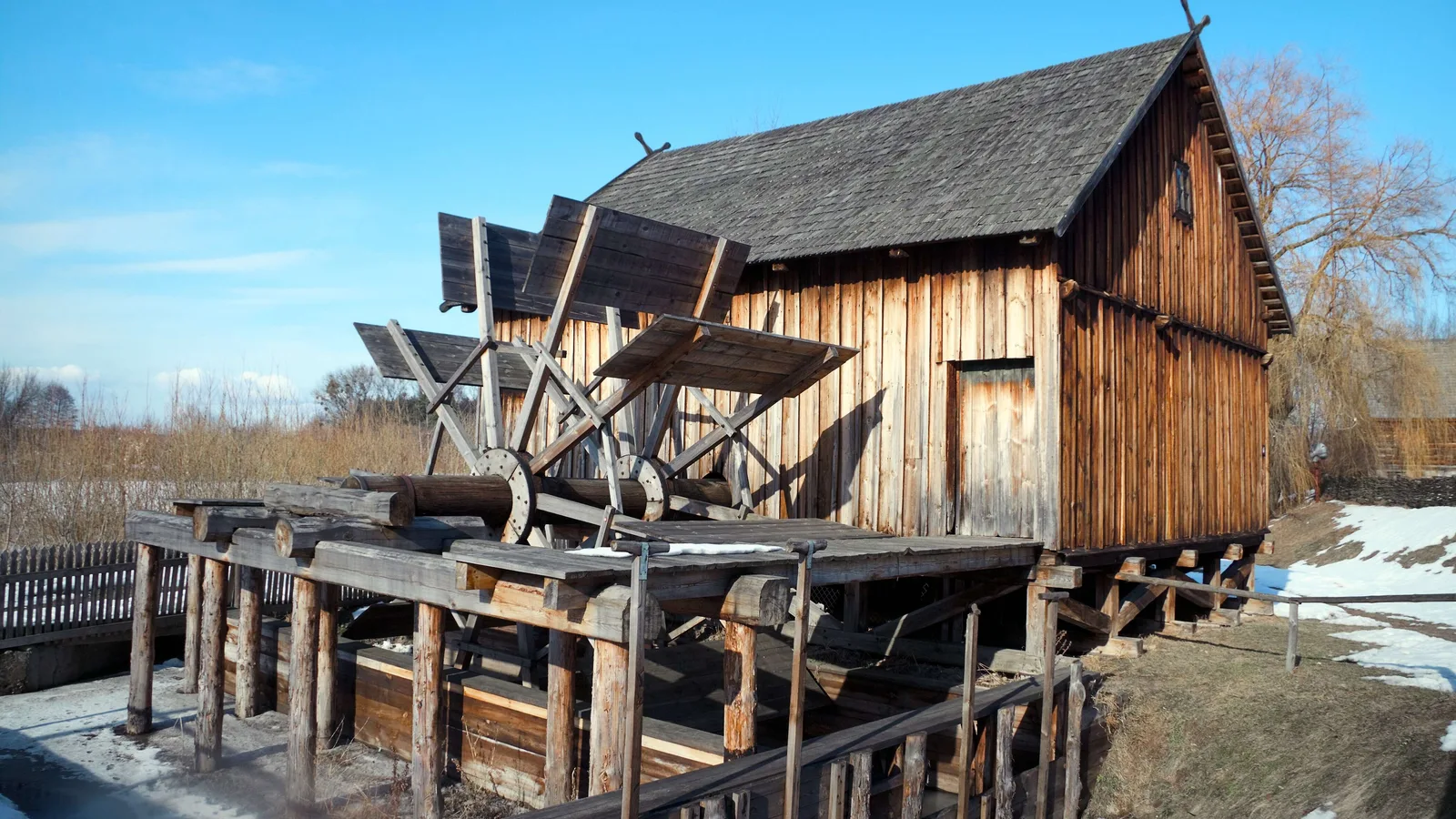
The mill is a fascinating invention that has made an essential contribution to human civilisation for thousands of years. In its many forms and functions, mill engineering has revolutionised the way people produce food, process materials and generate energy. This blog therefore explores the development of mill engineering from its beginnings in antiquity to modern times. Finally, a look will be taken at the possible future of mill engineering.
Origins in antiquity
The history of mill engineering reaches back to antiquity. The first mills were simple hand mills consisting of two stones between which grain was ground. This method was labour-intensive, but it enabled people to produce flour for bread and other foods.
In ancient Greece and later in the Roman Empire, the development of water-driven mills then began. This technological innovation used the power of flowing water to turn a grinding stone, which made the grinding process considerably more efficient. Water mills, and later also windmills, played a decisive role during this period in increasing agricultural productivity while at the same time supporting the growth of towns.
Medieval innovations
In the Middle Ages, mill engineering then saw significant advances. Water wheels were further developed in Europe to make use of different water sources. At the same time, the lack of flowing water in certain regions led to the increased use of windmills. These windmills, often constructed as imposing structures with rotating caps, shaped the landscapes of many European countries in the Middle Ages.
A remarkable development of medieval mill engineering was the invention of the grain mill, which was used not only for grinding grain but also for pressing oil, sawing wood and forging metal. This versatility made mills an indispensable part of medieval economy and society.
The Industrial Revolution and beyond
With the onset of the Industrial Revolution, the world of mill engineering changed dramatically. The invention of the steam engine and later of electric motors led to the development of steam and electric mills. These new technologies enabled unprecedented efficiency and production capacity. Mills were no longer dependent on natural energy sources, which revolutionised their choice of location and the scaling of production.
In the 20th century, the trend towards mechanisation and automation continued. Modern mills are highly complex plants that use computer-controlled technologies to process a wide variety of materials. Today's mills are able to grind enormous quantities of grain, saw wood or produce materials for the construction industry, and this with a precision and efficiency that would have been unthinkable in the past.
Sustainability and the future of mill engineering
In more recent times, the growing awareness of environmental issues and sustainable development has led to renewed interest in traditional mill engineering techniques. In this context, wind and water mills are experiencing a renaissance as environmentally friendly alternatives for generating energy. At the same time, innovations in technology are promoting the development of mills that are more efficient and more environmentally friendly.
It is not unlikely that the future of mill engineering will lie in the further development of these sustainable technologies. Researchers and engineers work continuously on optimising wind and water mills in order to increase their efficiency and expand their use in modern applications. Beyond that, new materials and manufacturing techniques can help to make mills lighter, more durable, more cost-effective and even more sustainable.
Conclusion
From the simple hand mills of antiquity to the highly modern plants of the present day, mill engineering has a long and fascinating history. Through the centuries, mills have played a decisive role in the development of human societies. Today mills stand on the threshold of a new era in which sustainability and technology go hand in hand. The history of mill engineering is a vivid example of how human inventiveness and adaptability have mastered the challenges and opportunities of every age.